

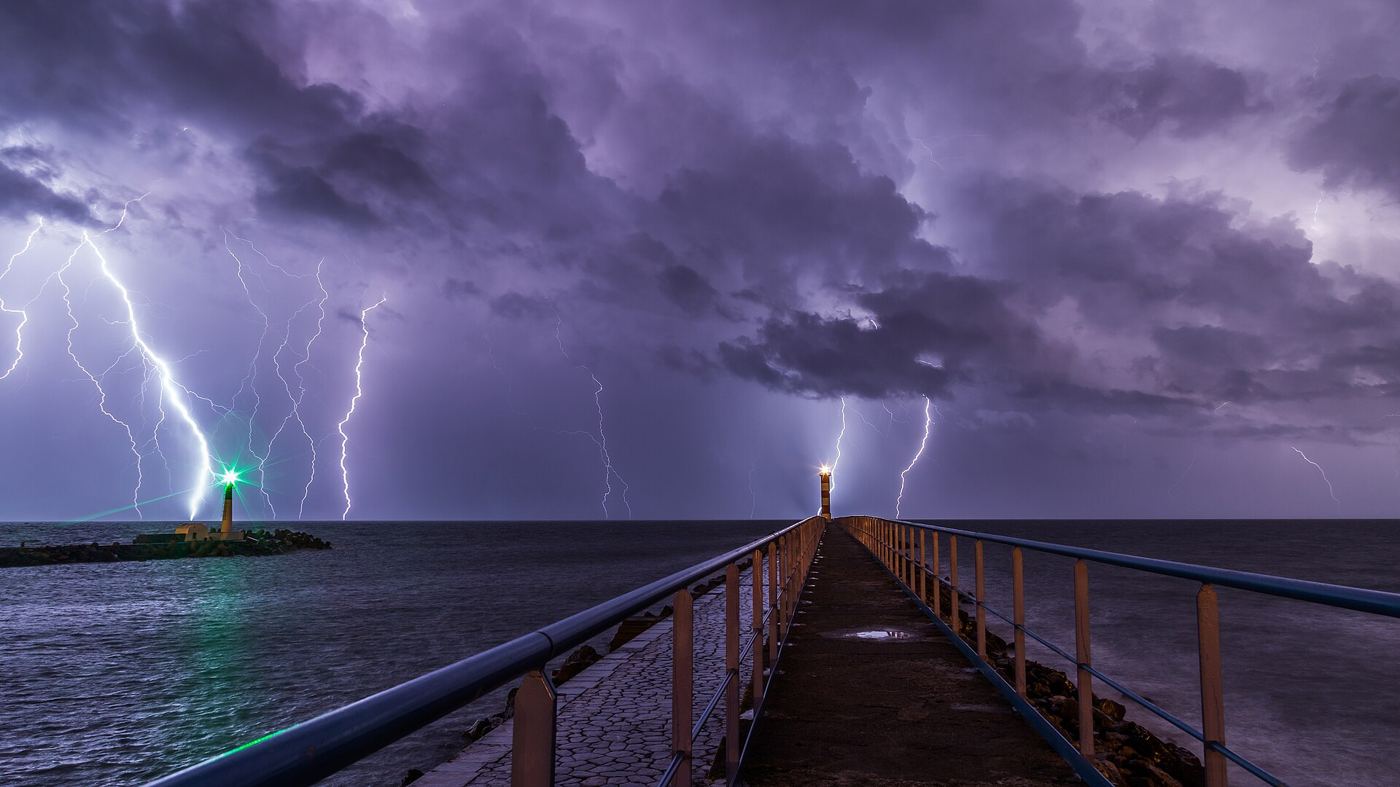
Above the tops of powerful thunderstorms, brief flashes of red and blue light flicker at the edge of space, lasting only thousandths of a second and stretching for tens of kilometres. These events, called sprites, blue jets and elves, were once dismissed as pilot folklore because they are so hard to see from the ground, hidden above cloud decks and gone before the eye can focus. High-speed cameras on mountains, aircraft and the International Space Station have now recorded them in detail, revealing that strong lightning does not end the electrical story of a storm but can trigger a second theatre of activity in the thin upper atmosphere. Sprites appear after especially powerful positive lightning strokes, when the sudden change in electric field above the cloud excites nitrogen molecules into glowing tendrils. Blue jets, by contrast, surge upward directly from thundercloud tops. Scientists study these discharges because they move energy and chemicals between the lower atmosphere and the ionosphere, potentially affecting radio propagation and the chemistry of the mesosphere. Each campaign combines ground lightning networks with orbiting sensors, so that a flash recorded in space can be matched to the exact stroke that caused it on the ground below the storm.
What the Evidence Shows
The research is gradually turning curiosities into useful measurements. Because sprites respond to the strongest lightning, their frequency may help characterise storm intensity in regions with few weather radars, including over oceans where aircraft fly. Laboratory experiments and computer models are clarifying how the discharges break apart molecules and create compounds that would not otherwise form at those altitudes, though their total effect on the atmosphere is still debated. Citizen scientists with sensitive cameras have become genuine contributors, logging events that professional instruments miss and helping build the statistics needed to link upper-atmosphere activity with storm type and season. There are practical stakes as well. The same electrical environment matters for high-altitude aircraft, balloons and the growing number of vehicles passing through the upper atmosphere, and understanding it improves the models used to protect electronics from atmospheric electricity. What began as a visual mystery is now a bridge between meteorology and space physics, showing that a thunderstorm’s influence reaches far above its clouds. As sensors improve, researchers expect to resolve the fine structure of these flashes and settle how much they matter, replacing anecdote with measurement one millisecond event at a time. Reporting and analysis from sources such as Nature track the same developments, and specialists following upper-atmosphere lightning sprites say the direction is now consistent across independent lines of evidence.
The Wider Context
The wider context is a research landscape in which replication and open data now decide reputations. Findings connected to upper-atmosphere lightning sprites are being checked by independent groups with shared datasets, and the teams involved publish their methods in full so rivals can test every step. That discipline is slower than a headline cycle, but it is why results in this area increasingly survive first contact with scrutiny.
What Happens Next
What happens next in the story of upper-atmosphere lightning sprites will be decided by follow-up work already under way: larger samples, longer observation and instruments that have not yet come online. The researchers involved are unusually united on one point, that the current results justify the next investment of time and money. Readers will not have to wait long for the first tests of that claim. You can follow related developments in our coverage of science.
None of this will be settled by a single announcement, study or product launch. The pattern to watch is accumulation: independent confirmations, honest reporting of failures and steady improvement in the underlying numbers. Readers who follow those signals, rather than the loudest claim of the week, will understand this subject better than most of the commentary surrounding it suggests is possible.
