

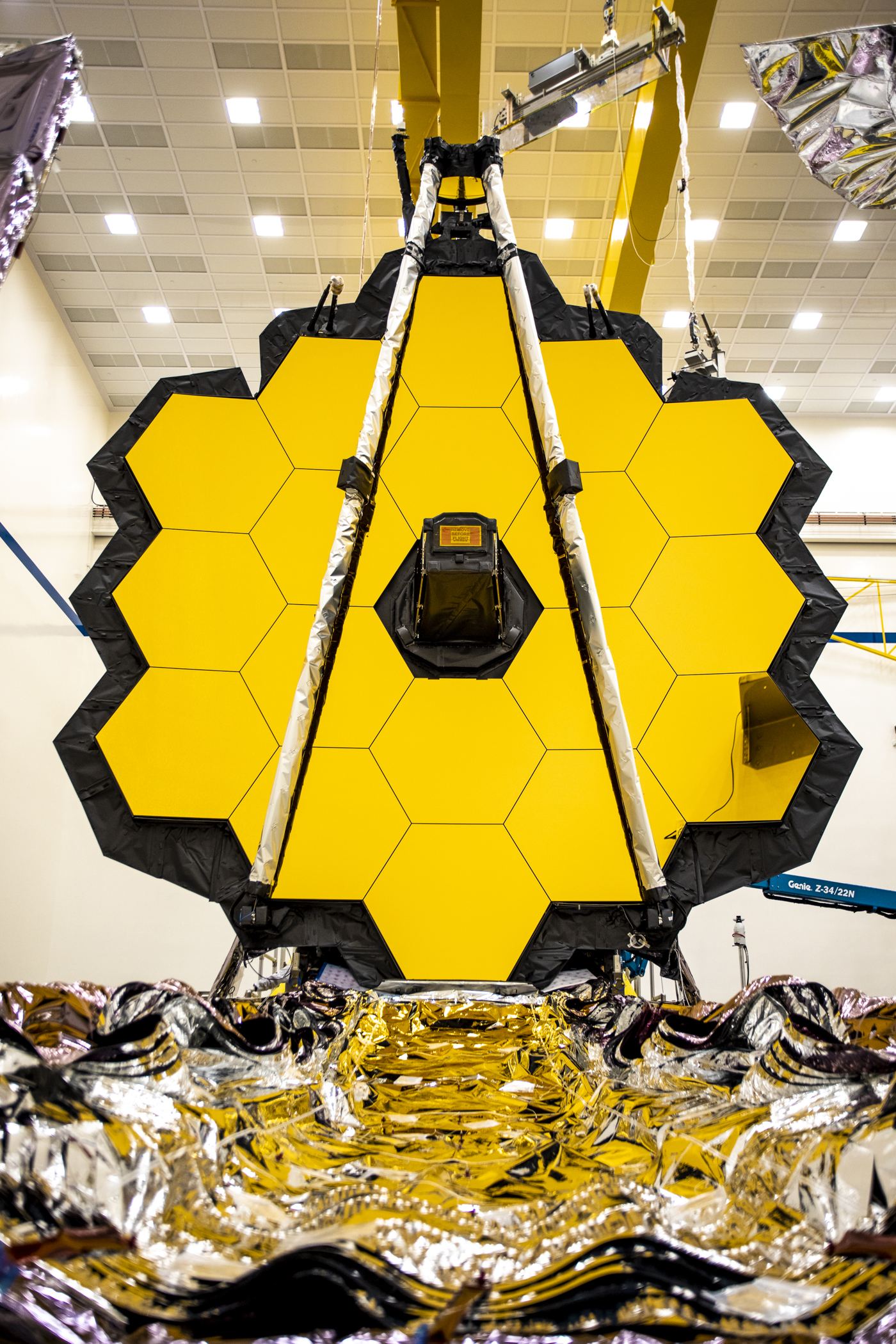
The James Webb Space Telescope has found a possible black hole that grew faster than its host galaxy in the early universe, offering a new clue to how giant black holes formed so quickly. The object sits in MARTA-3887, a clumpy, metal-poor galaxy seen about 12 billion years ago, and appears to have a mass of about 3.3 million suns inside a galaxy containing roughly 145 million solar masses in stars. The study, led by Mirko Curti of the INAF Astrophysics and Space Science Observatory of Bologna and posted to arXiv, was reported on 22 November 2026. Using Webb spectroscopy, the team detected a wide hydrogen-alpha line showing gas moving at about 1,270 kilometres per second, and the researchers are careful to say the galaxy possibly hosts the black hole.
What the Evidence Shows
Black holes in the early universe are a puzzle because some grew to enormous sizes when the cosmos was less than a billion years old, leaving little time for slow, steady feeding. One explanation is that they started from unusually massive seeds, while another is that they swallowed gas far faster than standard limits allow. MARTA-3887 adds to the evidence because its black hole looks oversized for its small host galaxy, suggesting the black hole raced ahead while the galaxy was still assembling. The team combined Webb spectroscopy with Hubble imaging and archival data from the Very Large Telescope’s MUSE instrument, using several lines of evidence rather than one, and the case remains a strong candidate rather than a confirmed detection. Reporting and analysis from sources such as Nature track the same developments, and specialists following the overmassive black hole in MARTA-3887 say the direction is now consistent across independent lines of evidence.
The Wider Context
The wider context is a research landscape in which replication and open data now decide reputations. Findings connected to the overmassive black hole in MARTA-3887 are being checked by independent groups with shared datasets, and the teams involved publish their methods in full so rivals can test every step. That discipline is slower than a headline cycle, but it is why results in this area increasingly survive first contact with scrutiny.
What Happens Next
What happens next in the story of the overmassive black hole in MARTA-3887 will be decided by follow-up work already under way: larger samples, longer observation and instruments that have not yet come online. The researchers involved are unusually united on one point, that the current results justify the next investment of time and money. Readers will not have to wait long for the first tests of that claim. You can follow related developments in our coverage of science.
None of this will be settled by a single announcement, study or product launch. The pattern to watch is accumulation: independent confirmations, honest reporting of failures and steady improvement in the underlying numbers. Readers who follow those signals, rather than the loudest claim of the week, will understand this subject better than most of the commentary surrounding it suggests is possible.
