

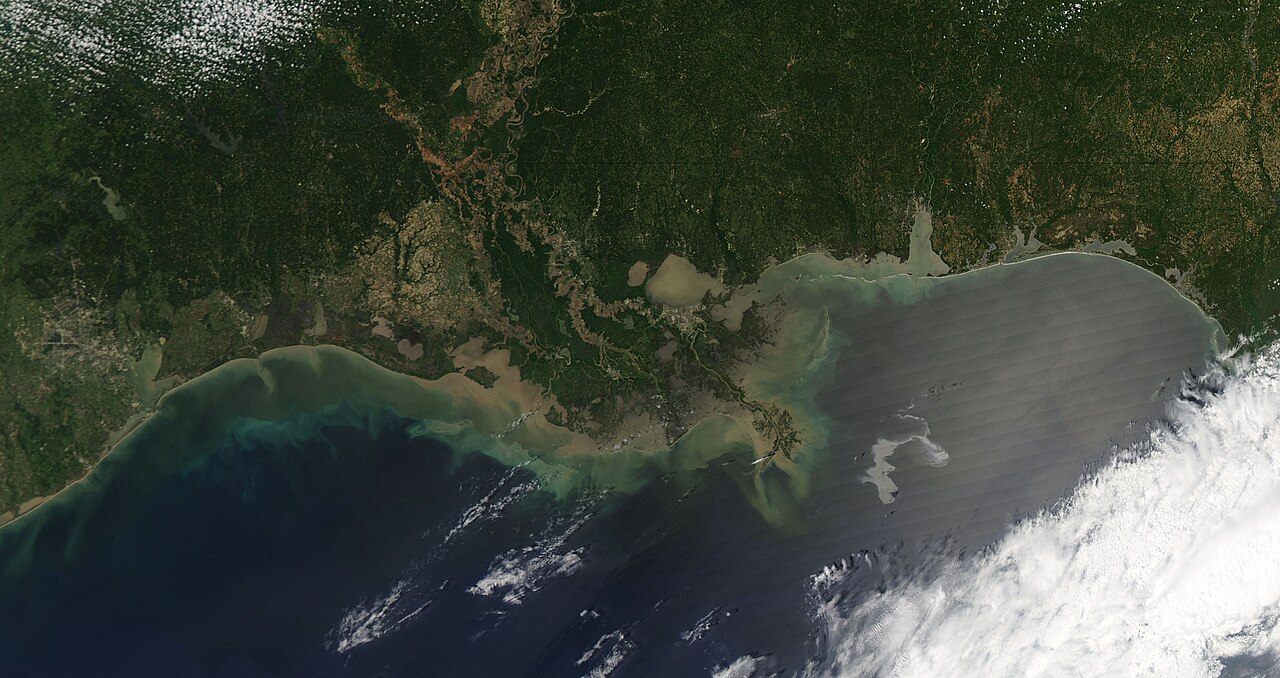
Fifteen years after the Deepwater Horizon disaster poured millions of barrels of oil into the Gulf of Mexico, the sea itself is still delivering its verdict. A new study finds that marine life in the Gulf declined dramatically in the years following the BP oil spill, a result that challenges the reassuring story that the ecosystem largely bounced back once the beaches looked clean again.
What the Study Found
The research tracks marine populations across the years after the 2010 blowout, the worst marine oil spill in history, and finds decline where recovery was expected. That pattern matters because the Gulf was not a pristine system knocked down once; it was a working sea, fished commercially and recreationally, already stressed by nutrient runoff, habitat loss and warming water. The study suggests the spill’s effects layered onto those pressures rather than fading neatly away.
Scientists who monitor the Gulf through agencies such as the National Oceanic and Atmospheric Administration have long warned that the deepest damage would be the slowest to see. Oil that sank, dispersed or settled into sediments does not announce itself in photographs. It shows up years later in reproduction rates, in the health of bottom-dwelling communities, and in the quiet absence of species that surveys once recorded routinely.
Why Decline Can Hide Behind a Clean Shoreline
Public memory of a spill is visual: oiled pelicans, blackened marsh grass, tar balls on white sand. By those measures, the Gulf recovered years ago, and tourism boards said so. Ecological recovery runs on a different clock. The food web’s foundations, marsh grasses, oyster reefs, larval fish, microbial communities, absorb damage that propagates upward slowly, reaching the dolphins, sea turtles and commercially prized fish that people actually count.
The Deepwater Legacy
Deepwater Horizon was unusual among spills because so much oil never reached the surface. It formed plumes in the deep sea and rained, as marine snow, onto the seabed, where cold and darkness slow every natural breakdown process. Deep corals and sediment communities injured then may need decades to recover, if the conditions that supported them return at all. Studies coordinated in the spill’s aftermath, including work assessed by the Environmental Protection Agency, documented injury across an unusually wide range of habitats.
What This Means for Coastal Communities
For the Gulf Coast, this is not an abstract scientific dispute. Fishing families, shrimpers and charter operators built livelihoods on the assumption that the resource would renew itself. Persistent decline translates into tighter catch limits, thinner seasons and harder arguments about compensation, years after the legal settlements were signed and the restoration funds allocated.
Restoration spending itself is part of the story. Billions from the BP settlement flow through projects to rebuild marsh, restore oyster reefs and monitor wildlife. Findings like these are the scorecard for that spending: they tell trustees which injuries are healing and which are compounding with newer stresses such as hypoxia and marine heatwaves. Ongoing coverage of the Gulf’s recovery is published at magazinegrace.com.
The Argument Ahead
Expect the study to be contested, as major spill science always is. Attribution is genuinely difficult in a sea changing for many reasons at once, and industry-funded research has often reached gentler conclusions. The honest scientific position is that a single study rarely settles a system this complex; it shifts the weight of evidence, and this one shifts it toward a longer, deeper injury than the public was led to expect.
There is a policy edge as well. Offshore drilling decisions made today, about leasing, safety rules and response capacity, lean on assumptions about how bad a spill really is and how long it lasts. If the answer is worse and longer than assumed, the risk calculations that justified past approvals deserve revisiting before the next ones are signed.
A Sea Still Being Measured
The Gulf of Mexico feeds, employs and shelters millions of people, and its recovery was always going to be measured in decades rather than news cycles. This study’s contribution is to insist, with data, that the measurement continue honestly, especially now that the cameras have gone.
Decline found years later is not a reason for despair about restoration; it is the information restoration needs. The worst outcome would be declaring the story finished while the sea is still telling it.
How Scientists Measure a Sea
Findings like these rest on unglamorous persistence: trawl surveys repeated on the same routes, tissue samples archived for decades, oyster reefs mapped bed by bed, and strandings recorded by networks of volunteers and officials. The value of such monitoring compounds slowly and collapses quickly when funding lapses, which is why marine scientists argue so fiercely for continuity. A decline detected in year fifteen is only visible because someone kept counting in years one through fourteen, when the story was assumed to be over.
The Gulf’s monitoring web is also a test of institutional memory. The scientists who responded to the spill are retiring; the datasets they built must outlive their careers, in formats future researchers can actually use. Several restoration programmes now treat data stewardship as a deliverable in its own right, recognising that the next study, the one that detects recovery or its absence in 2035, is being made possible or impossible by decisions taken today.
The Lesson Other Coasts Are Reading
Every region weighing offshore development reads the Gulf’s data as a preview of its own worst case. The emerging picture, of damage that is wider, deeper and longer than the visible emergency suggested, recalibrates what a spill means: not an event with an end date, but the opening of a multi-decade ecological account. That recalibration, grounded in patient measurement rather than argument, may prove to be this study’s most consequential effect.
