

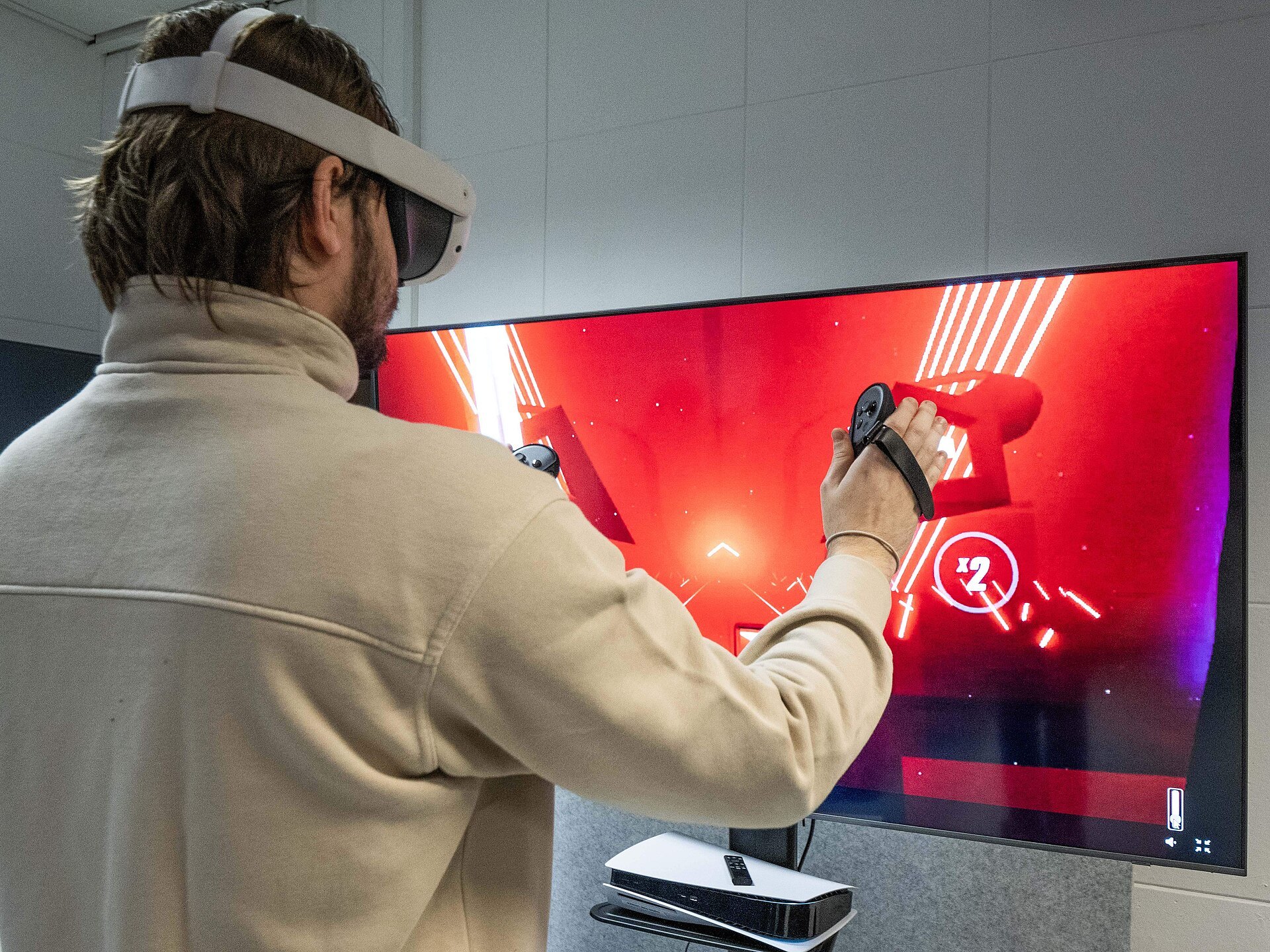
The strangest thing about virtual reality has always been the standing still. Players explore vast digital worlds while their bodies remain in a two-metre square, steering with thumbsticks. Virtuix, maker of the Omni One omnidirectional treadmill, has built its business on ending that compromise — and its new partnership with Meta, bundling the treadmill with Quest headsets, is the strongest signal yet that the industry’s giants take physical movement seriously as VR’s next phase.
The Bundle as a Strategy
Hardware history is unkind to peripherals that require assembly of someone else’s ecosystem. By selling treadmill and headset as one curated package, Virtuix removes the compatibility questions that strand niche hardware, while Meta gains a premium tier for Quest owners who want more than the base experience offers. It mirrors the console playbook: the platform profits when the accessory ecosystem flourishes. Our technology and AI coverage has followed VR’s platform economics as they mature from novelty retail into ecosystem competition.
What Walking Actually Adds
Omnidirectional treadmills use a low-friction bowl and specialised footwear, with a harness tracking crouching and turning, translating real steps into virtual movement. The effects users report are consistent: presence deepens because the vestibular system stops arguing with the eyes; motion sickness, VR’s oldest enemy, recedes for many players; and sessions become genuine exercise, with distances accumulating inside game worlds. Specifications and supported titles are maintained by Virtuix for prospective buyers weighing the investment.
The Friction That Remains
Honesty about obstacles is due. The bundle’s combined price places it in enthusiast territory, and even a compact treadmill claims floor space that many homes cannot dedicate. Content optimised for true locomotion is expanding but still trails the broader Quest catalogue. These are the classic contours of an early market: expensive, space-hungry, content-limited — and, for the users it fits, unlike anything else available.
The Hardware Keeps Shrinking Its Footprint
Each generation of locomotion hardware has attacked the same three complaints — size, noise and complexity — with measurable success. Early omnidirectional platforms were arcade furniture; the Omni One was re-engineered as a home product with a footprint closer to a treadmill desk, an assembly process measured in minutes and footwear that doubles as the sensor system. The direction is obvious even if the destination is distant: locomotion decks that fold, roll or stow, priced against high-end exercise equipment rather than against cars.
Software comfort features are maturing in parallel — adjustable movement scaling for sensitive users, seated modes for accessibility, and boundary systems that make the harness feel like a safety feature rather than a restraint. Bundle economics help here as well: a larger installed base funds the iteration cycle that standalone niche hardware could never afford. The Meta deal, viewed this way, is less about this year’s treadmill than about guaranteeing there is a next one — and a competitor’s answer to it, and a category where today there is only a pioneer.
Fitness Is the Trojan Horse
The partnership’s shrewdest aspect may be demographic. The buyer who hesitates over a gaming treadmill may not hesitate over home fitness equipment that happens to contain worlds. VR fitness has already proven it can move headsets; a device that turns a run through a fantasy landscape into the day’s workout speaks to two budgets at once. If the bundle succeeds anywhere first, expect it there — with gaming close behind. Follow the story with us on the homepage.
