

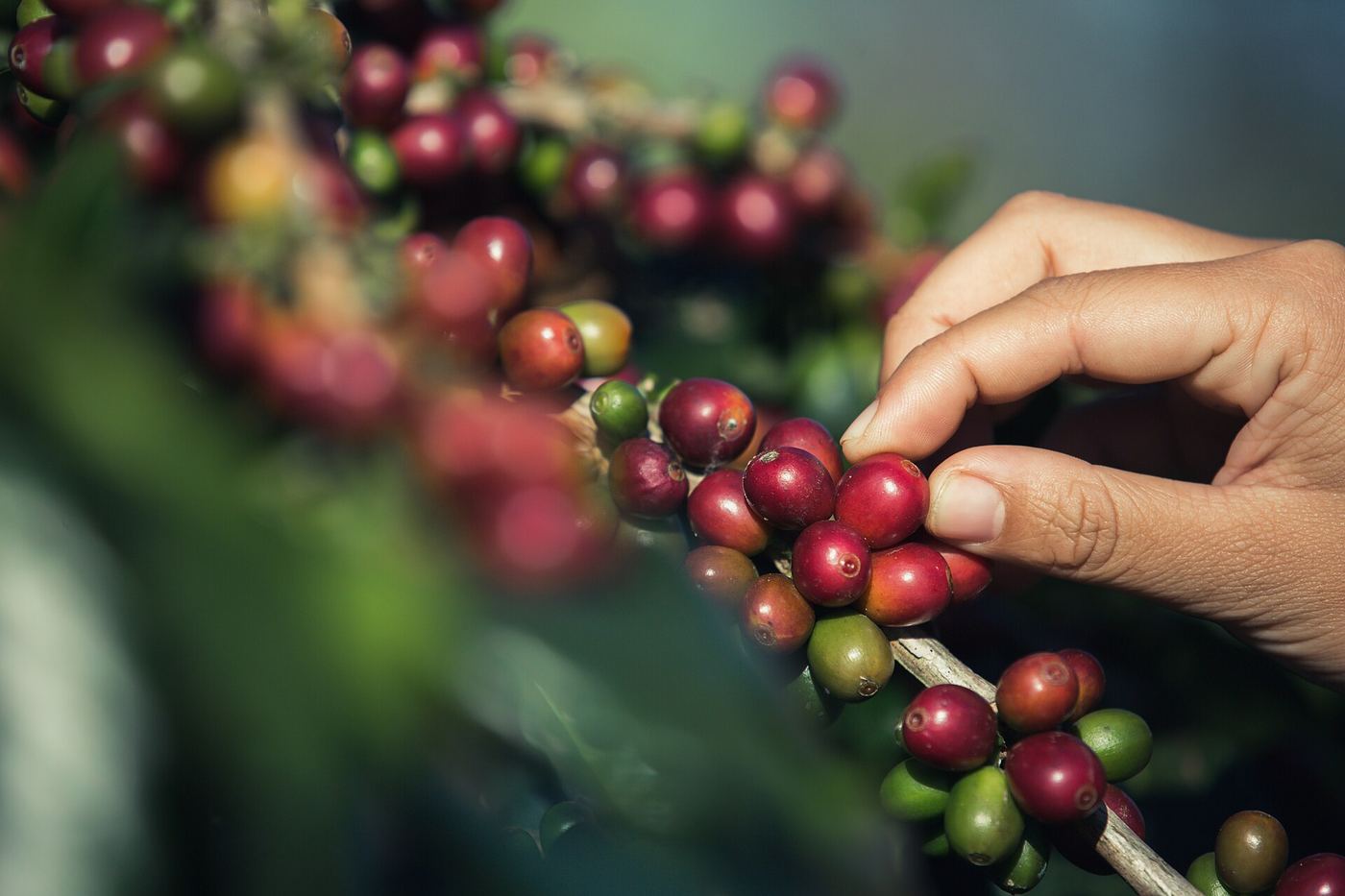
The world’s two favourite pick-me-ups have become case studies in climate economics. Cocoa prices smashed records after consecutive poor harvests in Ghana and Côte d’Ivoire, which grow most of the world’s supply; coffee followed, as drought and frost stalked Brazil’s arabica belt. Behind the futures charts are smallholder farmers — cocoa and coffee are overwhelmingly grown on plots of a few hectares — and behind the supermarket prices are roasters and chocolatiers deciding, in public, how much of the shock the shopper will feel.
Two crops, one vulnerability
Both crops are climatically fussy and geographically concentrated — the combination commodity analysts dread. Coffee wants altitude, steady rain and no frost; cocoa wants humid lowland forest without deluge. Climate assessments by the UN Food and Agriculture Organization project suitable coffee land shrinking substantially by mid-century, with production pushed uphill and into new regions. The short-term story is weather; the structural story is that the map of where these crops can grow is being redrawn under the farmers’ feet.
The human split is stark. High prices enrich farmers who have crop to sell and devastate those whose harvest failed — the same drought writes both stories. Our lifestyle desk has looked at the shopper’s end of the chain in our coverage of food prices and household budgets, where shrinkflation and recipe changes are the visible symptoms.
Adaptation takes root
The industry’s responses are long-term by necessity: shade-grown agroforestry that buffers cocoa trees from heat, drought-tolerant coffee hybrids moving from research stations to farms, and buyers finally paying premiums that fund replanting. A cocoa tree takes years to bear; a coffee bush likewise. Today’s plantings are the supply of the early 2030s, which means the climate decisions of this decade are already priced into future breakfasts.
The new normal in the cup
The search for new origins is redrawing the trade map in miniature. Coffee is being trialled at higher altitudes and in countries once too warm or too dry; cocoa buyers are investing in regions previously considered marginal. Liberica and robusta — the hardier, less fashionable coffee species — are gaining shelf space and respect as arabica’s range narrows. Purists may mourn the classic profiles, but the industry’s direction is unmistakable: resilience is becoming a flavour note in its own right, and the origins that survive the century will be chosen as much by climate models as by tradition.
Your kitchen is part of the story, whether it knows it or not. Roasters report consumers trading down in blend but not in ritual — cheaper beans, same morning ceremony — while specialty drinkers absorb the increases with a connoisseur’s fatalism. The chocolatiers’ version is the shrinking premium bar and the rising cocoa percentage on the label, turning necessity into marketing. Through all of it the farmers’ share of the final price remains stubbornly small, which is why fair-trade and direct-trade schemes have moved from niche virtue to supply-chain strategy for buyers who need farmers to survive long enough to plant.
Cheap chocolate and bargain coffee were artefacts of a stable climate and underpaid farmers; both subsidies are ending. Expect higher prices, smaller bars and more origin stories on labels as roasters compete on resilience. The cup is not disappearing. It is becoming honest about its cost.
